Carotid artery disease usually causes no symptoms until it causes a stroke. That is what makes it worth understanding. The carotid arteries carry most of the blood going to your brain, and when plaque narrows one of them, the first sign can be a stroke or a short warning episode called a TIA.
This guide covers what carotid narrowing is, the warning signs to know, who should be checked, and how we treat it at Complete Vascular Care in Arlington, TX.
The short version
- Narrowing in the carotid arteries is one of the causes of stroke, and it often causes no symptoms first.
- A carotid ultrasound is quick, painless, and tells you how narrow the artery is.
- Many people are best treated with medication and regular ultrasound checks.
- When the narrowing is severe or has already caused symptoms, surgery to remove the plaque can lower stroke risk.
- Sudden weakness, trouble speaking, or loss of vision in one eye is an emergency. Call 911.
What are the carotid arteries?
You have two carotid arteries, one on each side of your neck. They carry blood from your heart up to your brain, face, and eyes. You can feel your pulse in them just below the angle of your jaw.
How does carotid narrowing lead to a stroke?
Over time, plaque made of cholesterol, calcium, and other material can build up inside the artery wall. This is called carotid stenosis. The risk is not only that less blood gets through. A piece of plaque or a small clot can break loose, travel up into the brain, and block a smaller artery there. That is one of the main ways a stroke happens.
What are the warning signs of a stroke or TIA?
A TIA, or transient ischemic attack, causes stroke symptoms that clear up on their own within minutes or hours. It leaves no lasting damage, but it is a warning that a stroke may follow. Watch for:
- Sudden weakness or numbness in the face, arm, or leg, often on one side
- Trouble speaking, slurred words, or trouble understanding others
- Sudden loss of vision in one eye, sometimes described as a shade coming down
- Sudden dizziness, loss of balance, or trouble walking
If you notice any of these, call 911, even if the symptoms go away. Treatment works best when it starts fast, and a TIA needs to be checked the same day.
Who should be checked for carotid artery disease?
Carotid narrowing is more likely if you have:
- A history of smoking, now or in the past
- High blood pressure, high cholesterol, or diabetes
- Age over 65
- Peripheral artery disease, an aortic aneurysm, or heart disease
- A past TIA or stroke
- A whooshing sound in your neck, called a bruit, that your doctor heard with a stethoscope
If any of these apply, ask whether a carotid ultrasound makes sense for you.
How is carotid stenosis found?
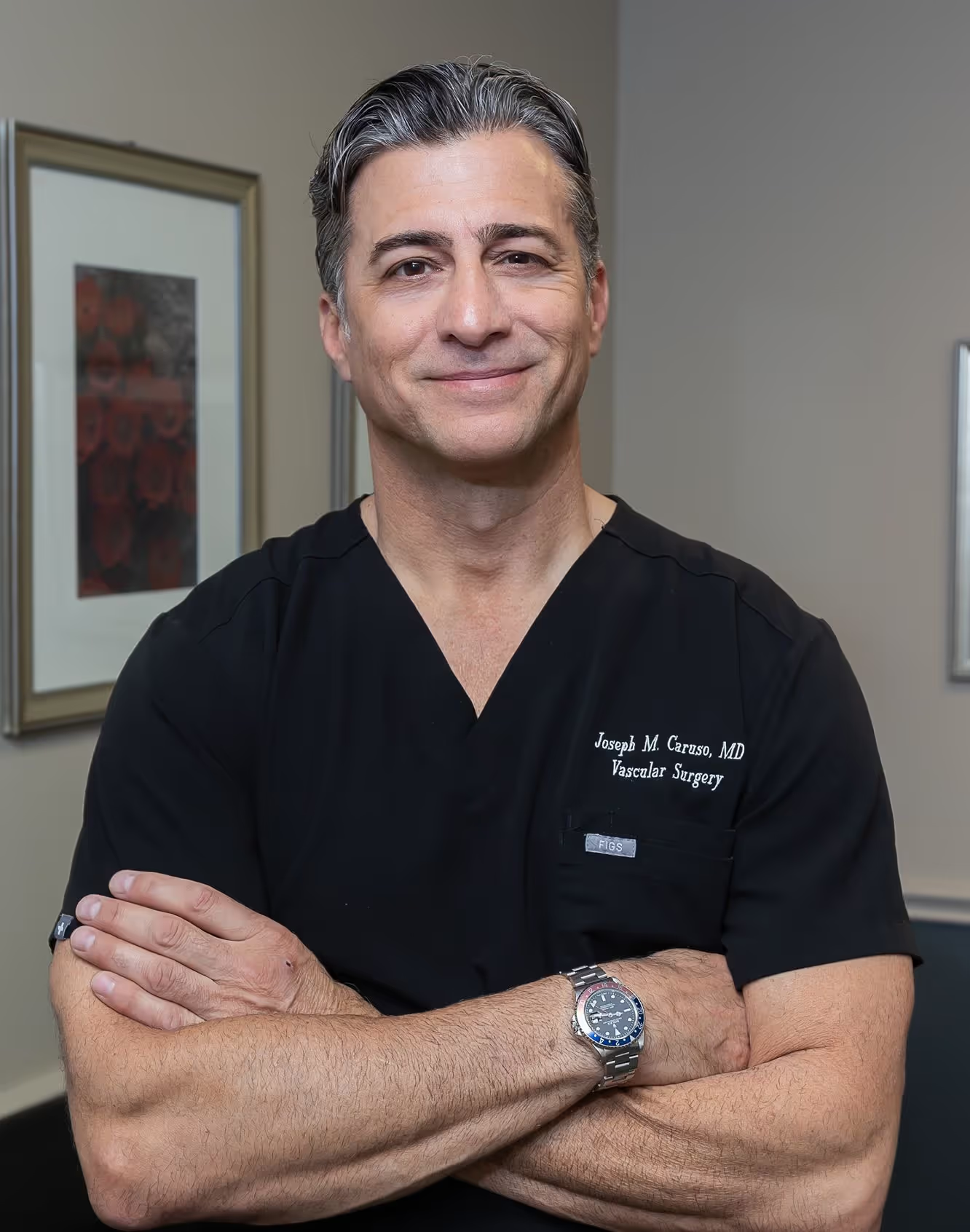
A carotid duplex ultrasound measures how narrow the artery is and how fast blood is moving through it. It is done in our own vascular lab, takes about twenty minutes, and involves no needles or dye. Dr. Caruso goes over the images with you the same visit. If surgery is being considered, CT or MR angiography gives a more detailed picture of the arteries.
How is carotid stenosis treated?
Two things guide treatment: how narrow the artery is, and whether it has already caused symptoms.
Medication and monitoring
Mild or moderate narrowing that has not caused symptoms is usually managed without surgery. That means controlling cholesterol and blood pressure, quitting smoking, taking an antiplatelet medication if it is right for you, and repeating the ultrasound on a set schedule to see if anything changes.
Carotid endarterectomy
When the narrowing is severe, or when it has already caused a TIA or stroke, carotid endarterectomy can lower the risk of a future stroke. Through an incision in the neck, Dr. Caruso opens the artery and removes the plaque from inside it. Most people stay in the hospital one night and are back to normal activity within a couple of weeks.
Carotid stenting
For some people, a stent placed through the arteries can hold the narrowed section open without an incision in the neck. It may be the better choice when open surgery carries more risk, such as after prior neck surgery or radiation, or when other health problems make surgery less safe.
What should you ask before a carotid procedure?
Not every narrowed carotid artery needs surgery, and the right choice depends on you. Before any procedure, it is fair to ask:
- How narrow is my artery, and has it changed over time?
- Have my symptoms come from this artery?
- Why do you recommend surgery, a stent, or monitoring for me?
- What are the risks of treating it compared with watching it?
As a vascular surgeon trained in both open surgery and stenting, Dr. Caruso can walk you through all of the options and tell you plainly which one fits your arteries and your health.
Frequently asked questions
Can I feel it if my carotid artery is narrowed?
Usually not. Most carotid narrowing causes no symptoms until a TIA or stroke, which is why testing people at higher risk matters.
Does a narrowed carotid artery always need surgery?
No. Many people do well with medication and regular ultrasound checks. Surgery is considered when the narrowing is severe or has caused symptoms.
Can medication or diet clear the plaque?
Medication and healthy habits can slow plaque growth and lower stroke risk, but they do not remove plaque that is already there.
How often will I need a carotid ultrasound?
That depends on how narrow the artery is. You will leave with a clear schedule rather than a vague plan to keep an eye on it.
Do I need a referral?
No. You can call and book directly, and we will send your results to your primary care doctor if you would like.
Book a carotid evaluation in Arlington
If you have risk factors for carotid artery disease, or your doctor heard a sound in your neck, a quick ultrasound can give you an answer. Call (817) 375-0300. Complete Vascular Care, 515 W Mayfield Rd #416, Arlington, TX 76014.