If your calf cramps after a few blocks of walking and the pain fades once you stop, that pattern has a name. It is called claudication, and it is the most common sign of peripheral artery disease, or PAD. Many people write it off as getting older, a bad knee, or a tired back. It is worth a closer look, because the same narrowing that causes leg pain can also threaten your heart, your brain, and in time, your leg.
This guide covers what PAD feels like, who is at risk, how it is found, and how we treat it at Complete Vascular Care in Arlington, TX.
The short version
- Leg pain that starts at a set walking distance and eases with rest is a classic sign of PAD.
- PAD is narrowing of the arteries that carry blood to your legs, usually from plaque.
- A simple test comparing the blood pressure in your ankle and arm, plus an ultrasound, can find it in one visit.
- Many people improve with a walking program and better control of risk factors. Others need a procedure to open the artery.
- Pain at rest, a foot sore that will not heal, or a cold, pale foot needs prompt care.
What does PAD leg pain feel like?
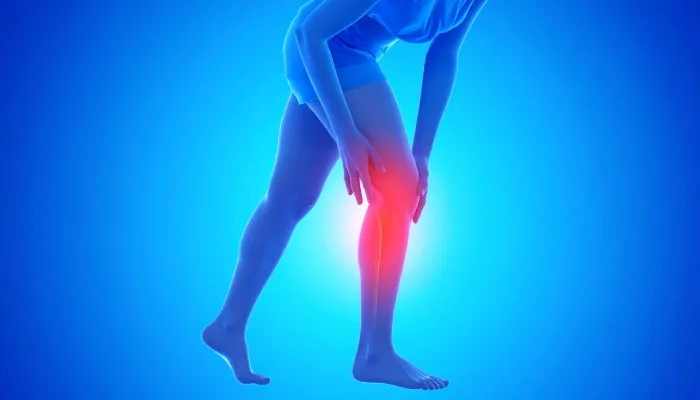
Claudication usually feels like cramping, aching, burning, or heavy tiredness in the muscles of the leg. It most often shows up in the calf, but it can also be felt in the thigh, hip, or buttock. What sets it apart is the pattern:
- It starts after you have walked a certain distance, often the same distance each time.
- It goes away within a few minutes once you stop and stand still.
- It comes back when you start walking again.
- Over months, the distance you can walk before it starts may get shorter.
Other problems can cause leg pain too. Arthritis pain tends to be in the joint and is often worst when you first start moving. Pain from a narrowed spinal canal often eases only when you sit down or bend forward, not just when you stop walking. Sorting out which one you have is part of the first visit.
Why does PAD cause pain when you walk?
Your leg muscles need more blood when they work than when they rest. When plaque narrows an artery, enough blood may still get through while you are sitting, but not enough to keep up once you start walking. The muscle runs short of oxygen and starts to hurt. When you stop, demand drops, flow catches up, and the pain fades.
Who is at risk for PAD?
PAD is more likely if you have one or more of the following:
- A history of smoking, now or in the past
- Diabetes
- High blood pressure
- High cholesterol
- Age over 65, or over 50 with diabetes or a smoking history
- Heart disease, a past stroke, or kidney disease
- A family history of PAD, heart disease, or stroke
When is leg pain an urgent problem?
Most claudication is not an emergency, but some signs mean blood flow is getting low enough to put the foot at risk. Call us promptly if you notice:
- Pain in your foot or toes while resting, especially at night, that eases when you hang your foot over the side of the bed
- A sore, blister, or cut on your foot or toes that has not healed in about two weeks
- Toes that look pale, blue, or dark, or a foot that feels much colder than the other
A leg that suddenly becomes cold, painful, pale, or numb is an emergency. Call 911.
How is PAD diagnosed?
Your first visit starts with your history and an exam, including checking the pulses in your feet. From there:
- An ankle-brachial index, or ABI, compares the blood pressure at your ankle with the blood pressure in your arm. A lower reading at the ankle points to narrowing somewhere in the leg.
- A duplex ultrasound in our own vascular lab shows where the narrowing is and how much it limits flow. It involves no needles or dye, and Dr. Caruso goes over the images with you the same visit.
- CT angiography or a catheter angiogram is added only when we are planning a procedure and need a detailed map.
How is PAD treated?
Treatment depends on how much the narrowing limits your life and whether your foot is at risk. Most plans include more than one of the steps below.
A walking program and risk factor control
For many people with claudication, a structured walking program is one of the most effective treatments there is. Walking until the pain starts, resting, and walking again helps the body build smaller vessels around the blockage over time. Quitting smoking, controlling blood sugar, blood pressure, and cholesterol, and taking the medication Dr. Caruso recommends all slow the disease and lower your risk of heart attack and stroke.
Minimally invasive procedures
When pain limits your daily life or flow is low enough to threaten the foot, the artery can often be opened from the inside. Through a small puncture, usually in the groin, a balloon can widen the artery, a stent can hold it open, or a device can remove plaque. Many of these procedures are done without an overnight stay.
Bypass surgery
Some blockages are too long, too hard, or in the wrong place for a balloon or stent to hold up well. A bypass uses your own vein or a graft to route blood around the blocked section. It is a bigger operation, but for the right anatomy it can be the longer lasting answer.
Why see a vascular surgeon for PAD?
Dr. Joseph M. Caruso is double board certified and has spent 20 years performing both open and minimally invasive vascular surgery. That matters because the first procedure you have can affect what options are left later. A surgeon trained in both approaches can choose the one that fits your arteries, and if a stent is not the right answer, he can say so and offer the operation that is.
Frequently asked questions
Is leg pain when walking just part of getting older?
No. Age raises the risk of PAD, but pain that shows up at the same distance every time and eases with rest has a cause, and it is usually findable.
Can PAD get better without a procedure?
Walking distance often improves with a structured walking program and good control of risk factors. The plaque does not go away, but many people never need a procedure.
Will I need a stent?
Not necessarily. Many people are treated with exercise and medication alone. When a procedure is needed, Dr. Caruso chooses between a balloon, a stent, plaque removal, or bypass based on your imaging.
Is PAD connected to heart disease?
Often, yes. The same process that narrows leg arteries can narrow the arteries to the heart and brain, which is why a PAD diagnosis is a reason to look after your overall vascular health.
Do I need a referral?
No. You can call and book directly, and we will send your results to your primary care doctor if you would like.
Book a PAD evaluation in Arlington
If the distance you can walk keeps getting shorter, or a sore on your foot will not heal, an evaluation can tell you why. Call (817) 375-0300. Complete Vascular Care, 515 W Mayfield Rd #416, Arlington, TX 76014.